let’s make our planet greener!

Books on Indian Rivers

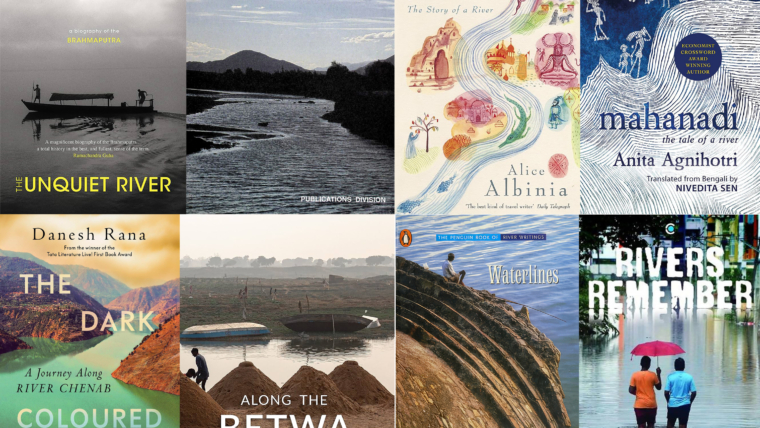
Rivers – the birthplace of civilisations, the carriers of history, the protagonists of many myths, and also the seats of many a conflict and resolution. What secrets do they carry? Here are some of our favourite books on Indian rivers – from tracing history, to contemporary commentary, these books give a lot more insight into our rivers that are the nation’s lifelines.

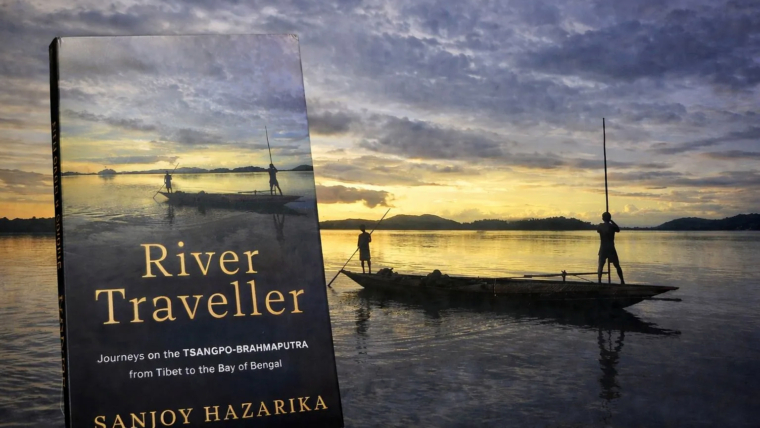
River Traveller: Journeys on the Tsangpo-Brahmaputra from Tibet to the Bay of Bengal

An intimate portrait of one of the world’s largest and widest rivers, River Traveller by veteran journalist Sanjoy Hazarika chronicles the author’s journeys down the river over more than two decades. Charting through the course of the river from Tibet to Arunachal Pradesh, Assam and Bangladesh, documenting history and observing the lives of people depending on it for a living, this book touches on multiple subjects.

Slow Living: What You Can Do About Climate Change by Vandana Shiva and Shreya Jani, published by Roli Books

In a world consumed by greed for consumption and speed, Slow Living advocates for change—small, progressive steps toward a sustainable future. Questioning the dominant narratives that widen the inequality prevalent in societies, the book shows how individual choices and small acts of resistance can, in turn create ripple effects that could restore our relationship with the planet.

Ecosystems versus Empires- A review of On The Banks of Pampa by Volga, translated by Purnima Tammireddy

In the development agenda of the 21st century, the land takes the biggest blow, and the struggles of those who live adapting to its rhythms are buried under the cities and industries that rise. On the Banks of Pampa, by Volga, a prominent name in Telugu literature, translated by Purnima Tammireddy, is a reimagining of Sabari’s tale in Ramayana.  Reduced…

How Sangam Literature Imagined a Coastal World of Balance

Sangam Literature beautifully categorises the landscapes of Tamil land into five tinais or ecological zones. In this essay, researcher and writer Sindu Deivanayagan depicts the web of life in neithal tinai, coastal landscapes and how it can inform today’s coastal development. Image credit – Wikimedia Commonshttps://thewire.in/culture/how-sangam-literature-imagined-a-coastal-world-of-balance

Eartha by Vinitha Agarwal

Splendid Poison Frog Was it a cold December Wednesdaywhen you left?A frosty, flinty, pin-point momentthat seals most pull-outs.Silent like a hushed Mayday signalreverberating in the ripples of a pond.What time exactlydid you hop overto where nowhere exists?Did the sun flickerat your vanishing act?The way yellow convulses on a colour palettewhen mixed with greenbefore turning blue.Was it the hour of dusk,your…

Change Climate: The Last Battle for Planet Earth by Vandita Bajpai

With natural disasters now an almost daily reality, Change Climate is a visceral and urgent call to arms for the last generation that can wage a war to save our planet. In a world where cities are on the verge of drowning and oceans are poisoned with plastics, this book confronts the gravity of our environmental time bomb with an…

Interview with Arpitha Kodiveri

The uniqueness of India and its Indianness lies in its natural diversity. The ancient sages and saints made efforts to bind man with nature. Since ancient times, poets have composed verses in Telugu language with nature as the focal point. In Telugu literature, animals like snakes, spiders and elephants were shown crossing the boundaries of devotion. The epic Kalahastishwara Mahatmyam Kavya, written by Dhurjati, the court poet of Sri Krishna Devaraya, is an example. Humans learnt the form of Satvik Bhakti from Shri (Spider), Kaala (snake) and Hasti (elephant), which are not domestic creatures.

Rewilding India: The CWS Story

The uniqueness of India and its Indianness lies in its natural diversity. The ancient sages and saints made efforts to bind man with nature. Since ancient times, poets have composed verses in Telugu language with nature as the focal point. In Telugu literature, animals like snakes, spiders and elephants were shown crossing the boundaries of devotion. The epic Kalahastishwara Mahatmyam Kavya, written by Dhurjati, the court poet of Sri Krishna Devaraya, is an example. Humans learnt the form of Satvik Bhakti from Shri (Spider), Kaala (snake) and Hasti (elephant), which are not domestic creatures.

FOLLOW US
@greenlitfest_
@greenlitfest

AN INITIATIVE OF

SNext Logo 2025

CONTACT US

  91-80-41126557 / 9513715974
  22, Bilden Park, 1st A Main, G M Palya,
Bengaluru – 560 075.

greenlitfest © 2026. All rights reserved.