
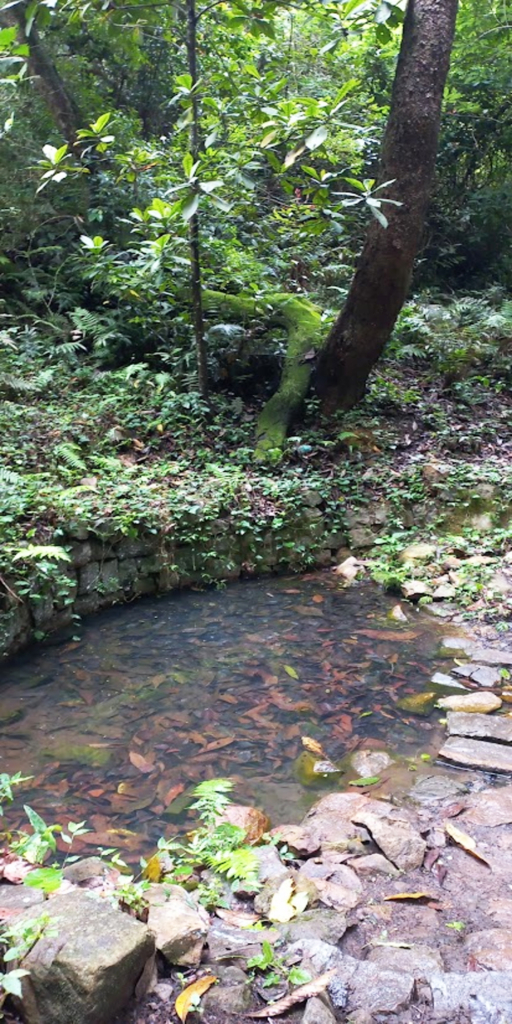
For people like me from mountain communities, the forest is a sacred space, the one we enter for our annual rituals, cautious not to litter or shout within its realm. Animals were introduced to us through their scat and footprints. Our worlds were small, and resources seemed sufficient, abundant even, in the mountains, and threats were something fictional that existed only for people living far away.
Today, some of these forests host visitors throughout the year. There are subtle conflicts around the forests – one person’s sacred space, another’s recreational area, yet another’s only way to access his village; the list goes on. Land, ownership and resources have always been the bone of contention among humans, and it is this complex relationship and history that India’s Forests: Revisiting Nature and History seeks to explore.
Edited by Arupjyoti Saika and Mahesh Rangarajan and published by Vintage (an imprint of Penguin Random House India), this anthology of ten academic essays by scholars offers a kaleidoscopic view of forests. How do the different people associated with the forest define it? What kinds of control does the state have over it? Were forests and agrarian fields always viewed through a binary lens? How do cultural and social practices influence the forests? The essays answer these dilemmas and more.
Conflict was acknowledged, but coexistence was the norm, Shibani Bose writes in her piece that traces the archaeological research in Indian forests, referencing, among other things, art and rock paintings from prehistoric times. Quoting Lahiri, she says forests are natural guardians of India’s archaeological heritage. Ecology and archaeology, the two threads that are hard to connect, may give us a vivid history of human-environment interaction.
The reader is made to understand that the rich history of the country’s forest ecology before the arrival of colonists cannot be viewed blindly through an outdated pre-colonial lens. Analysing the ancient texts of India, Kumkum Roy shows how forests were viewed in societies that lived in that time period. The boundaries between vana and grama were porous, she explains and shows how forests were integral to the society and the punishments that awaited those who intended destruction. In collating native vocabulary to describe forests, Aloka Parasher Sen depicts how forests had different meanings attached to them over time and how they have evolved in the human gaze.
The reader learns that harmony rarely defined the relationship between forest dwellers and the forest. Meera Ann Oommen and Kathleen D. Morrison insist that such romantic notions of sustainable communities living in isolation are naïve. Essays by Maya Ratnam on the Baiga community and Mukul Sharma on the politics of sacred groves in Jharkhand emphasise this. Be it the bewar technique/ shifting agricultural practices of the community or the ecological and social representations of the sacred groves, they reveal the cultural, gendered and sometimes religious complexities of living closely with the forests.
There never is a simple, linear, one-sided narrative to the relationship between people and their forests. Sudha Vasan’s essay highlighting the traditional identity of villagers in Kullu Valley in Himachal Pradesh despite the migration of workers calls for a reanalysis of the forest governance framework. It also portrays what the fragmentation of a community means for a forest.
The forests of India are as diverse as its people, and reading this collection, one is reminded of Dr Tarsh Thekaekera’s words in the fourth Green Literature Festival, which emphasised local solutions for local problems. He also mentioned that one act or law cannot apply to control the forest ecosystems in the entire country.
Vasudha Pande’s essay details the Chipko Movement and how success and recognition altered its structure. There were new environmental regulations after the movement; it helped envision a different strategy, but a movement as grand could not stop what was to unfold.
At a time when the conflict between state and citizens over forests and resources is high, Indian Forests shows how a certain imperiousness by those in power was always present across ages. Pick this book to understand the intricacies of the forests that were here before you and me and our immediate ancestors.
As bulldozers come to raze forests in Andaman and Nicobar Islands and other parts of India, it is imperative to ask ourselves: why forests? These ecosystems aren’t just carbon sinks; they also hold our histories- social, communal and political, our deities and promises for our future. As Shekhar Pathak tells us in his foreword, the centrality of forests in our lives will continue. Perhaps the solutions to the many ecological problems of our times lie in the past.

Monisha Raman, through her writing, both fiction and non-fiction, Monisha Raman aims to trace the unseen connections between people and the land. She is the author of The Highlands of Yore (Readomania, 2025), which is also forthcoming in the USA and Canada by Running Wild Press (June 2026). Her essays and short stories have appeared in various literary and ecological magazines.