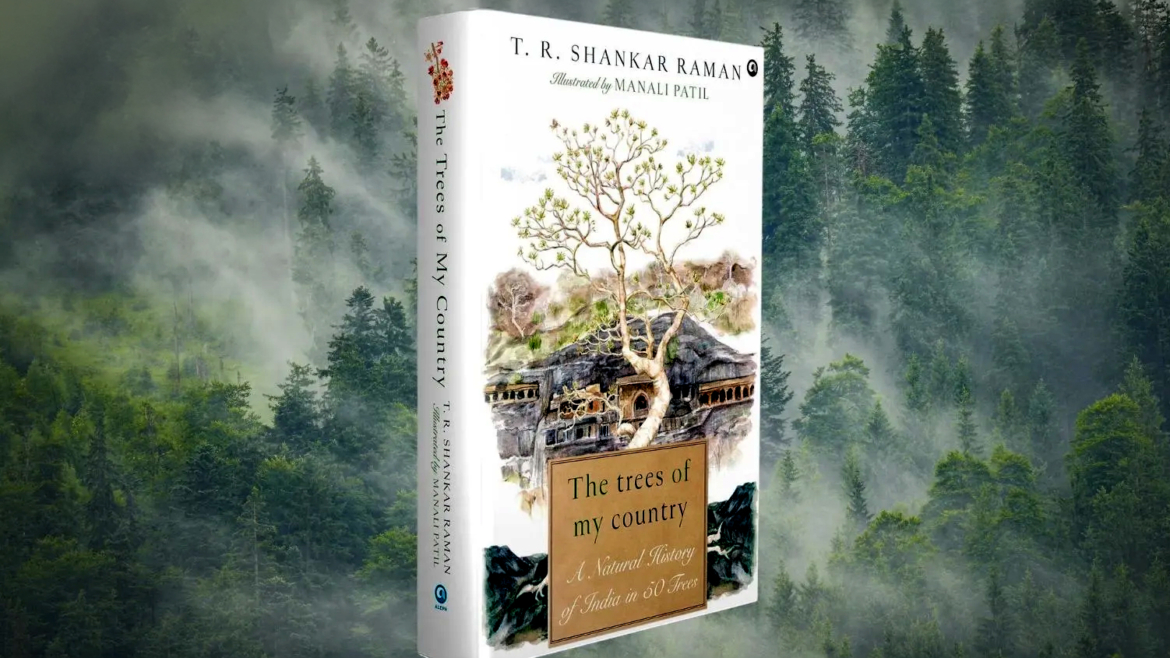
‘I see trees as species that have a rich connection to the ecosystems and other species around them,’ Dr T. R. Shankar Raman (author and scientist) notes in this Zoom conversation with author Aparna Karthikeyan. In his recent work, The Trees of My Country: The Natural History of India in 50 Trees, he explores the rich plant diversity of India through fifty species from different ecosystems.
In this conversation, Raman challenges the generic view of ecosystems as serving humans, which in turn leads to their exploitation. His book looks at trees beyond what they can serve human societies. Recalling the scale of devastation planned in the Andaman and Nicobar Islands, he explains how losing the Shompen community’s traditional knowledge would affect the country.
Watch the entire conversation here:
T. R. Shankar Raman likes to imagine he’s a writer turned wildlife scientist turned writer. His writing, emerging from close observations over the years and field experiences across India, evokes new and immersive perceptions of nature. His earlier books include a collection of his essays in The Wild Heart of India: Nature and Conservation in the City, the Country, and the Wild. He also co-authored Pillars of Life: Magnificent Trees of the Western Ghats with his partner Divya Mudappa. Together, as scientists of the Nature Conservation Foundation, they now lead a program to restore tropical rainforests based out of a field research station in the Anamalai Hills of the Western Ghats.
Aparna Karthikeyan is a Chennai based independent journalist and author. Her non-fiction book Nine Rupees an Hour documents the disappearing livelihoods of rural Tamil Nadu. She has written five books for children. Aparna’s award-winning series on eight crops in Tamil Nadu – Let Them Eat Rice – will be published as an anthology by Westland Books in December 2026.