
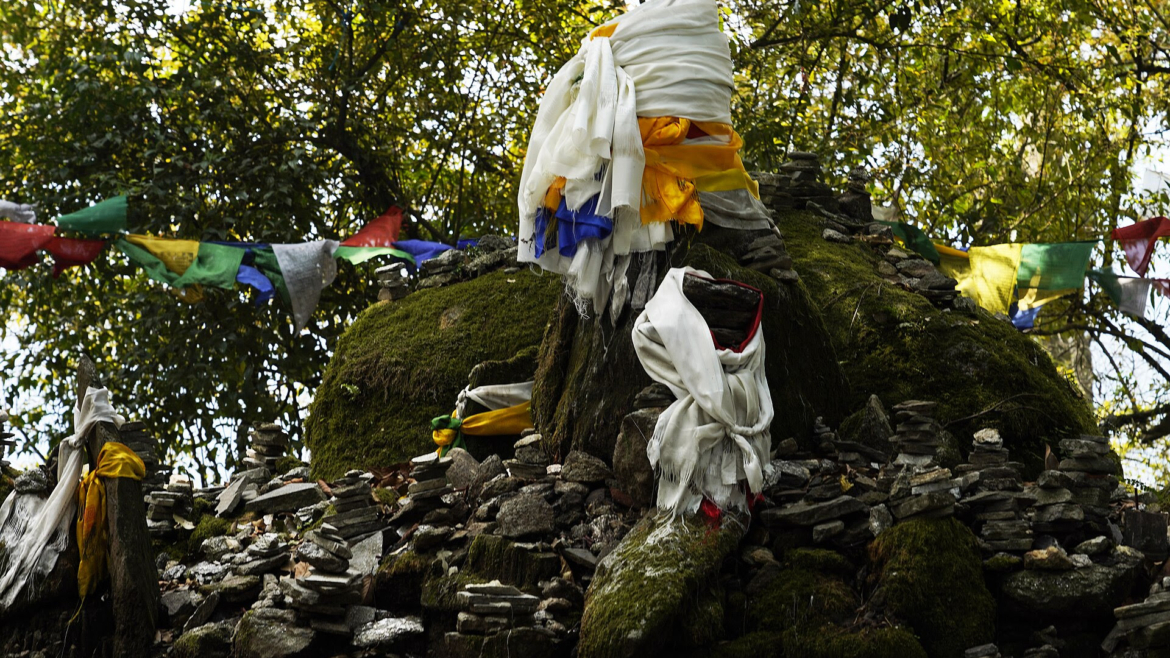
A recent study documents medicinal plants used by Indigenous communities in West Sikkim, linking traditional healing to the conservation of sacred groves and monastery forests.
The sacred groves in this region are reservoirs of medicinal plants, sustained through cultural and spiritual traditions.
Researchers recorded plant-based remedies with local healers, though experts caution that such practices are mostly social in nature and not easily reduced to scientific metrics.
Read the full story here!
The sacred groves of India’s Himalayan region are home to a vast repository of medicinal plants. These culturally safeguarded spaces function as informal conservation areas, preserving medicinally important species while reinforcing community-led stewardship of biodiversity. Yet, despite their importance, both the ecological base and the knowledge systems associated with these groves remain largely undocumented and are increasingly vulnerable to erosion.
The study by botanists at Sikkim’s SRM University documents 70 medicinal plant species used by Lepcha, Bhutia, Nepali, Limbu and Tibetan communities to treat 35 ailments. Conducted between July 2022 and June 2024, the study recorded the ethnomedicinal practices of Indigenous communities and traditional healers across West Sikkim.
Biswajit Bose, the corresponding author of the study and Associate Professor of Botany at the university, says the documentation shows how culturally protected forest patches such as sacred groves, Gumpa forests and monastery Gumpa forests function as community-led conservation units for medicinal plant diversity in West Sikkim district. The village commons that preserve these groves demonstrate how traditional knowledge systems operate as conservation reserves. He adds that the study also offers “a baseline dataset for future pharmacological research”.
Political ecologist and geographer Amitangshu Acharya cautions against looking at sacred groves only as sites for conservation or carbon storage. He warns that listing herbs as treatments for specific diseases and linking them to particular communities can be risky, as it may make it easier for pharmaceutical companies to access Indigenous knowledge and commercialise these culturally significant landscapes.
This Mongabay India 3 March 2026 article, is being published here under a Creative Commons Attribution-No Derivatives 4.0 International License.